growing · April · 7 min read
Cutting Garden Layout: how I arrange rows, beds and paths (and why)
How I lay out my cutting garden for maximum productivity, minimum weeding, and harvests that last from May to October.
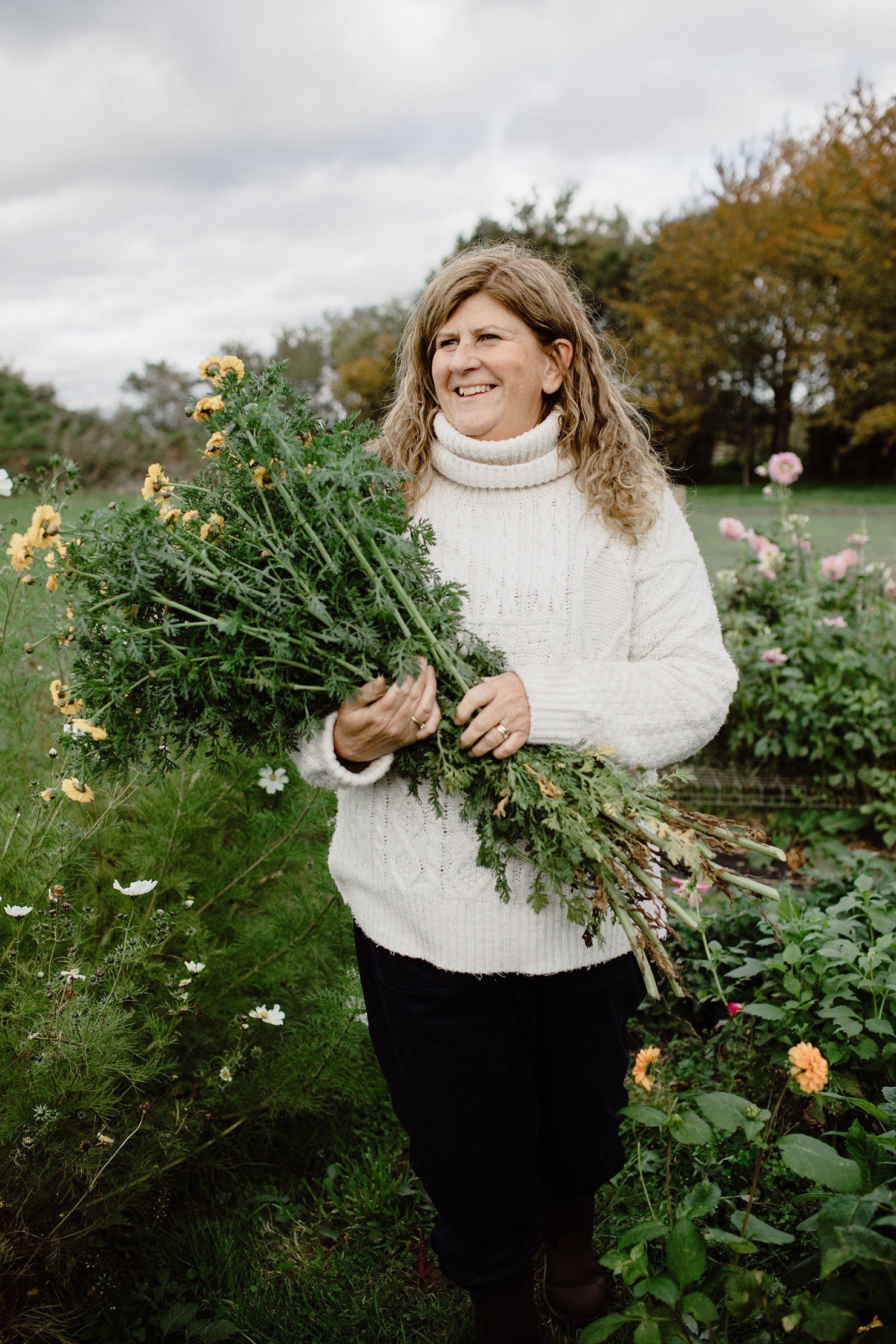

I have walked hundreds of cutting gardens over the past two decades, from half-allotment plots to acre-wide fields, and I can tell you this: the difference between a garden that delivers armfuls of stems all season and one that limps along is rarely the seed list. It is almost always the layout. A clever cutting garden layout saves your back, cuts your weeding time in half, and makes succession planting so much easier that you actually do it instead of just planning to. I redesigned my own layout three times before I got it right, so let me share what works and what I would never do again.
Why layout matters more than you think
Layout determines how much you can harvest without back pain. If you cannot reach the centre of a bed, those plants at the back will stay unpicked or you will tread on neighbouring stems trying to get to them. Neither is good.
A good design reduces weeding time by half because you can hoe or hand-weed every square centimetre without contorting yourself. Access to every plant matters more than fitting in extra rows. I learned this the hard way when I planted five rows across a 150 cm bed and spent the entire summer on my knees, crawling between plants. The extra 20 stems per week were not worth the physio bills.
Your cutting garden layout also dictates how easily you can rotate crops, add compost, and succession-sow. If your beds are a jumble of widths and your paths meander, you will waste time every single week just navigating the space. A simple, repeatable layout makes everything faster.
Bed width: the 120 cm rule
I settled on 120 cm beds years ago and I have stuck with them ever since. That width lets you reach the centre from both sides without stepping into the bed, which keeps the soil structure intact and your boots clean. I can hoe, plant, stake, and pick without ever compressing the growing area.
Narrow beds, around 60 to 80 cm, work brilliantly in small gardens or courtyard spaces. You sacrifice a bit of efficiency because you have more path per square metre, but the trade-off is worth it if you are working in a tight spot or if your soil is heavy and you want to avoid any trampling at all. I recommend narrow beds for anyone starting out with a no-dig flower bed system, because you can build and mulch them in an afternoon.
I use 180 cm beds in my polytunnel, but only because I have hoops overhead that prevent me from leaning in from the sides. I walk down the centre path and reach out to both edges, which just about works. Outside, though, I would never go wider than 120 cm. It is the Goldilocks width: not too narrow, not too wide, just right.
Paths: materials, width, and weeding
Bark or woodchip paths suppress weeds and look tidy without any plastic underneath. I top mine up every autumn with a 5 cm layer of fresh woodchip, which breaks down slowly and adds organic matter to the edges of the beds. The paths stay weed-free for months, and when the odd dandelion does appear, it pulls out easily.
Forty centimetres is the minimum width for a path, and that is really only comfortable if you are walking empty-handed. If you use a wheelbarrow or a garden trolley, go for 60 cm. I made my main access paths 70 cm wide and I am glad I did, because I can push a barrow of compost or a bucket caddy along them without clipping the bed edges.
Avoid grass paths. They creep into beds and need constant trimming, and if you let them go even a week too long in spring, you will spend an hour with the strimmer and then another hour pulling grass seedheads out of your dahlias. I tried grass paths in my first season and I was edging them every fortnight. Bark is so much easier.
Row spacing and plant density
Most annuals need 15 to 30 cm spacing depending on the variety and how thick you want the stems. I plant dahlias 45 cm apart, sweet peas 20 cm, and cosmos 30 cm. Those spacings give me sturdy, florist-quality stems that last well in the vase.
Closer spacing gives thinner stems but more of them, which is fine for mixed bunches or if you are selling at a market where volume matters more than individual stem weight. I space my cornflowers at 15 cm and my nigella at 10 cm when I am succession-sowing in June, because I know I will be cutting them young for informal posies.
Row spacing within a bed depends on the crop. I plant single rows of dahlias down the centre of a 120 cm bed, with 40 cm of bare mulch on either side so I can hoe and pick without brushing against the foliage. For annuals like ammi or orlaya, I plant three rows per bed with 30 cm between rows. The outer rows sit about 15 cm in from the path edge, which gives me room to kneel without kneeling on the path itself.
If you want a full breakdown of spacing for every major cut flower, I cover it in detail in my Seed to Vase guide, along with planting depths and germination temperatures.
From seedlings to stems: my planting plan through the season
In April, I direct sow hardy annuals in rows: cornflowers, nigella, ammi, orlaya, calendula. I mark the rows with a taut string line and sow in shallow drills, then cover lightly with compost. The soil is still cool, so germination takes two to three weeks, but the plants are tough and they do not need coddling.
May is transplanting month. I move half-hardy seedlings (cosmos, zinnias, celosia, rudbeckia) into the beds after the last frost, which here in Buckinghamshire is usually around the second week of May. I plant them at their final spacing straightaway, because I do not want to move them again.
June to August is all about succession sowing of quick crops like cornflowers and nigella. I sow a short row every three weeks, which keeps the stems coming until October. This is the rhythm that took me years to get right, and it is one of the topics I discuss most often on The Cut Flower Podcast: how to keep sowing even when the garden looks full.
I also tuck in late dahlias in early June if I have spare tubers. They will not flower until September, but September dahlias are gold, so it is worth the bed space.
What I would change if I started again
I would make paths wider. I often drag a bucket along the bed edge when I am picking, and a 40 cm path is just a bit too tight for that. If I were laying out the garden from scratch tomorrow, I would go for 60 cm paths across the board and accept the lost growing space. The time I would save in awkward manoeuvring would pay for itself in a month.
Permanent beds save so much time compared to rotational layouts. I know the theory says you should rotate your crops to avoid pest build-up, but in a small cutting garden where you are growing dozens of different species and changing the layout every year anyway, I think permanent beds make more sense. You build them once, mulch them every autumn, and never dig them again. That is the system I use now, and I wish I had committed to it sooner.
If space is tight, grow vertically. Sweet peas, climbing nasturtiums, and runner beans all give you masses of stems from a tiny footprint. I run sweet peas up 2-metre canes in a double row, 20 cm apart, and I get more pickable stems per square metre from that row than from any other crop in the garden. If you are working with a small urban plot or a small corner of an allotment, vertical crops are your best friend. I go into vertical layouts in much more detail in my post on the best flowers to grow for cutting.
If you want a complete framework for planning, planting and picking your cutting garden from seed, my Seed to Vase online course walks you through every step. You get my full planting calendar, variety lists, detailed video tutorials, and direct feedback from me in the members' community. It is the course I wish I had when I started twenty years ago, and it will save you at least two seasons of trial and error.
Frequently asked
What is the best cutting garden layout for beginners?+
Start with one or two beds, each 120 cm wide and as long as your space allows. Use 40 cm bark paths between them. Plant in rows running the length of the bed, spacing plants according to the seed packet. This layout is simple, gives you access to every plant, and grows a surprising amount of flowers even on 10 square metres.
How wide should paths be in a cutting garden?+
Minimum 40 cm, ideally 60 cm if you use a wheelbarrow or want to kneel comfortably while harvesting. I use 50 cm paths on my farm. Narrow paths save space but make weeding and picking awkward. Wide paths feel luxurious and reduce soil compaction at the bed edges.
Should I use raised beds or ground-level beds for cut flowers?+
Ground-level beds work perfectly well and cost nothing. Raised beds (15 to 20 cm high) warm up faster in spring, drain better on heavy clay, and are easier on your back. I use both. If you are starting on grass or compacted soil, no-dig raised beds are the quickest route to good results.
How do I plan what to plant where in my cutting garden?+
Group plants by height: tall (dahlias, sunflowers, cosmos) at the back or centre, medium (zinnias, cerinthe, ammi) in the middle, short (nigella, cornflowers) at the front. This makes picking easier and prevents shade problems. I also group by harvest time, so I am not trampling over early crops to reach late ones.