growing · February · 9 min read
Ten Best Annuals for Cutting I Grow Every Year in My Cutting Patch
The ten hardy and half-hardy annuals I sow every February without fail, because they deliver armfuls of flowers from June through to the first frosts.
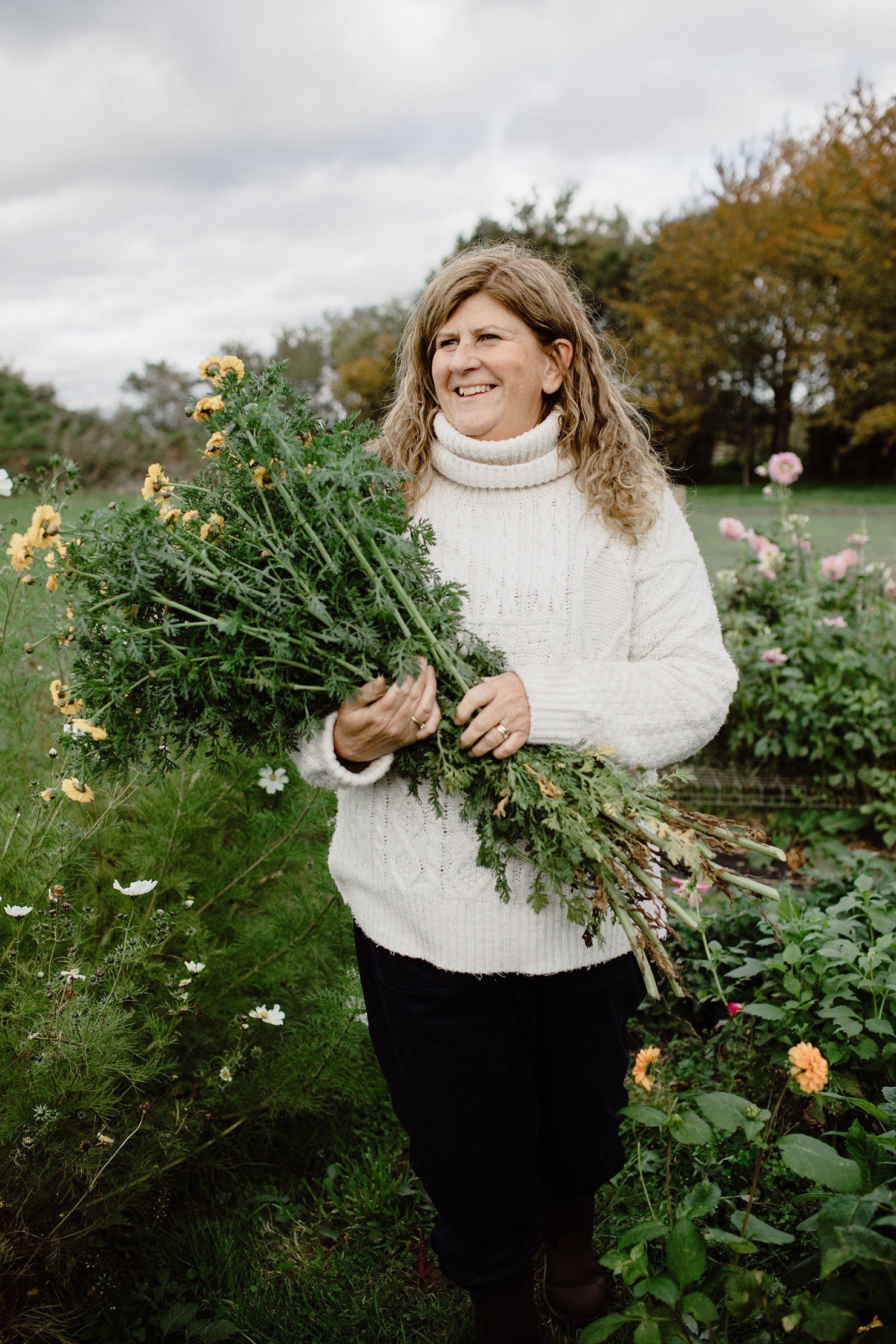

# Ten Best Annuals for Cutting I Grow Every Year in My Cutting Patch
Every February I pull out my seed boxes and sort through last year's leftovers. Some packets get put back on the shelf. A few novelties get crossed off the list. But there are ten annuals I sow without question, every single year, because they have earned their place through sheer reliability, productivity and beauty in the vase.
These are not the trickiest, the most exotic, or the most Instagram-worthy. They are the workhorses. The ones that pay their rent in stems. The best annuals for cutting, tested over twenty years on my farm in Buckinghamshire.
If you are planning your cutting garden for the season ahead, this is where I would start.
Why Annuals Are the Backbone of a Cutting Patch
Annuals germinate, grow, flower and set seed within a single season. That makes them fast, predictable and incredibly generous with their blooms. Many are true cut-and-come-again flowers: the more you pick, the more they produce.
Perennials have their place, but annuals give you volume. They fill the gaps between your peonies and dahlias. They extend the season at both ends. They are cheap to grow from seed, and if something fails, you have lost a few pence and a square metre, not a year's investment.
I grow annuals in succession, sowing small batches every two to three weeks from February through to June. That way I have constant supply, not a glut followed by a gap.
My Ten Best Annuals for a Cutting Garden
1. Ammi Majus
Ammi majus is the single most useful flower I grow. White umbels on tall, strong stems (90 to 120 cm), it flowers from June through to October if you keep picking. It softens every arrangement. Brides love it. Florists buy it by the armful.
I sow it direct in March and April, or start it in modules in the polytunnel in February. It does not like root disturbance, so if you module-sow, pot on gently or plant out young. Space plants 20 to 25 cm apart.
Ammi is one of the easiest annuals to grow. It tolerates poor soil, does not need staking if grown in a block, and rarely suffers from pests. If you grow only one thing from this list, grow ammi.
2. Cosmos
Cosmos is the flower that got me hooked on growing. It is foolproof, prolific, and utterly charming. I grow both Cosmos bipinnatus (the tall, frilly one) and Cosmos sulphureus (the shorter, hot-coloured one).
For cutting, the best varieties are the taller single forms: 'Purity', 'Sensation Mixed', 'Xanthos'. They have longer stems (up to 120 cm) and better vase life than the doubles. Cosmos is a true cut-and-come-again flower. Deadhead or pick every two days and it will keep producing until the frosts.
I sow cosmos direct from late April onwards, once the soil has warmed. Earlier sowings can be started in modules in March. Space 30 cm apart. No staking, no fuss.
3. Orlaya Grandiflora
Orlaya looks like a more delicate, lacy version of ammi. It has finer foliage and slightly smaller umbels, usually with a hint of pink or green. It flowers earlier than ammi (May to July) and has a shorter season, but the stems are exquisite.
Sow orlaya in modules in February or direct in March. It is slower to germinate than ammi and slightly fussier about root disturbance. Plant out at 20 cm spacing. It prefers a sunny spot with decent drainage.
I always grow both orlaya and ammi. Orlaya fills the early-summer gap, ammi takes over from July onwards.
4. Nigella (Love-in-a-Mist)
Nigella damascena is one of the easiest annuals to grow and one of the prettiest. The flowers come in shades of blue, pink, white and purple, surrounded by a ruff of feathery foliage. The seed pods are just as beautiful as the flowers and dry perfectly for winter arrangements.
Nigella does not transplant well, so I sow it direct in March and again in April. It likes cool weather and will bolt if sown too late. Space 15 to 20 cm apart. It needs no feeding, no staking, no care at all.
Pick the flowers just as they open. They last four to six days in the vase. Leave some stems to set seed and you will have volunteers the following year.
5. Cornflower (Centaurea Cyanus)
Cornflowers are among the best annuals for cutting because they are so easy and so cheerful. I grow the tall varieties: 'Blue Boy', 'Black Ball', 'Classic Magic'. They reach 70 to 90 cm and have strong, wiry stems.
Sow direct in March or September (for earlier flowers). Cornflowers are completely hardy and prefer cool conditions. Space 15 to 20 cm apart. They need no support if grown in a block.
Pick them when the petals are just starting to unfurl. They last about a week in the vase and the more you cut, the more side shoots they produce.
6. Scabious (Scabiosa Atropurpurea)
Scabious is one of my favourite cut flowers. The pincushion blooms come in deep burgundy, soft pink, white and lavender. They have long stems (60 to 90 cm) and flower from June through to October.
I sow scabious in modules in March and plant out in April at 25 cm spacing. It is not the fastest to establish, but once it gets going it is incredibly productive. Scabious is another excellent cut-and-come-again flower: pick or deadhead every few days.
The dark varieties ('Black Knight', 'Ace of Spades') are particularly popular with florists.
7. Calendula (Pot Marigold)
Calendula officinalis is tough, reliable and flowers for months. The best cutting varieties are the tall doubles: 'Indian Prince', 'Bronzed Beauty', 'Snow Princess'. They reach 50 to 60 cm and have sturdy stems.
I sow calendula direct in March and April, or in modules for earlier flowers. It tolerates poor soil and cool weather. Space 20 to 25 cm apart. Calendula will self-seed enthusiastically, so be prepared to weed out volunteers.
Pick the flowers when they are three-quarters open. They last about five days in the vase. The petals are edible, if you fancy adding them to salads.
8. Cerinthe Major 'Purpurascens'
Cerinthe is an unusual annual with blue-grey foliage and nodding purple bracts. It looks like nothing else in the cutting patch. Florists and wedding clients love it for its architectural quality.
Sow cerinthe in modules in March and plant out in May. It does not like root disturbance, so handle carefully. Space 30 cm apart. Cerinthe prefers full sun and good drainage. It can be slow to establish but once it flowers (June to September) it is very productive.
Pick the stems when the bracts are fully coloured but the flowers are still closed. Vase life is about a week.
9. Larkspur (Consolida Ajacis)
Larkspur is the annual version of delphinium, and in many ways it is better for cutting. It has tall spires of flowers (up to 120 cm) in shades of blue, pink, white and purple. The stems are strong and the vase life is excellent (seven to ten days).
I sow larkspur direct in September for flowers in May and June, or in March for July and August flowers. It needs cool weather to germinate. Space 20 cm apart. Larkspur does not transplant well, so direct sowing is best.
It is one of the few annuals that benefits from a bit of support. I use horizontal netting at 30 cm and 60 cm.
10. Rudbeckia (Black-Eyed Susan)
Rudbeckia hirta is technically a short-lived perennial, but I treat it as an annual. It is one of the longest-lasting flowers in the vase (ten to fourteen days) and it flowers from July through to the first frosts.
I grow 'Sahara', 'Cherokee Sunset' and 'Chim Chiminee'. They reach 60 to 90 cm and have strong, branching stems. Sow in modules in March and plant out in May at 30 cm spacing. Rudbeckia is slow to establish but incredibly productive once it gets going.
It tolerates heat, drought and poor soil better than most annuals. A real workhorse.
How I Grow These Annuals
I grow most of these in no-dig beds, 1.2 metres wide, with 40 cm paths between. That width lets me reach in from both sides without compacting the soil. I mulch with compost or well-rotted manure every autumn.
I sow hardy annuals (ammi, orlaya, nigella, cornflower, calendula, larkspur) direct from March onwards, or start them in modules in February if I want earlier flowers. Half-hardy annuals (cosmos, cerinthe, rudbeckia, scabious) get sown in modules in March and planted out after the last frost in mid-May.
I do not feed these annuals much. Too much nitrogen gives you foliage and weak stems. A top dressing of compost in spring is usually enough. I water in dry spells, but once established most of these are surprisingly drought-tolerant.
Planning Your Succession
The key to a constant supply of flowers is succession sowing. I sow small batches (one or two short rows, or a dozen modules) every two to three weeks from February through to June. That way I avoid the feast-and-famine cycle.
For the earliest flowers, I start hardy annuals under cover in February. For the longest season, I sow cosmos, scabious and calendula right through to early June. Larkspur and cornflower sown in September will flower in May, six weeks before spring-sown batches.
If you are just starting out with growing flowers, I explain all of this in much more detail in my Seed to Vase online course. I cover sowing, spacing, succession, harvesting, post-harvest care and troubleshooting, with step-by-step videos and a members' community for questions.
These ten best annuals for cutting are the foundation of my cutting patch. They are reliable, productive and beautiful. They give me flowers from May through to October with very little fuss. If you grow these, you will have more than enough stems for your own home, and plenty to sell or give away.
I also talk about many of these varieties and how I grow them in more depth on The Cut Flower Podcast, where I share practical advice and answer listener questions every week.
Ready to Grow Your Own Cutting Garden?
If you would like a proper framework for planning, sowing, growing and harvesting your own cut flowers, my Seed to Vase online course covers everything I have learned in twenty years of growing. You will get step-by-step video lessons, downloadable resources, a members' community and my personal feedback on your progress. It is the course I wish I had had when I started.
Frequently asked
What are the best annuals for a cutting garden?+
The best annuals for cutting include ammi majus, cosmos, orlaya, nigella, cornflower, scabious, calendula, cerinthe, larkspur and rudbeckia. These are reliable, productive and easy to grow from seed. Most are true cut-and-come-again flowers that produce more stems the more you pick.
When should I sow annuals for cutting?+
Hardy annuals like ammi, cornflower and nigella can be sown direct from March, or started in modules in February. Half-hardy annuals like cosmos and cerinthe should be sown in modules in March and planted out after the last frost in mid-May. Succession sow every two to three weeks for constant supply.
How far apart should I plant annuals in a cutting garden?+
Spacing depends on the variety. Small annuals like nigella and cornflower need 15 to 20 cm. Medium annuals like ammi and scabious need 20 to 25 cm. Larger annuals like cosmos and cerinthe need 30 cm. Closer spacing gives you more stems per square metre but thinner stems.
What are cut-and-come-again flowers?+
Cut-and-come-again flowers are annuals that produce more blooms the more you pick. The act of cutting encourages the plant to produce side shoots and more flowers. Cosmos, ammi majus, scabious, cornflower and calendula are all excellent cut-and-come-again flowers. Pick or deadhead every two to three days for maximum productivity.