growing · October · 3 min read
When Is a Bulb Not a Bulb? Tubers, Rhizomes and Corms Explained
Why the language matters: a clear guide to bulbs, corms, tubers and rhizomes — and how each one multiplies in your garden.

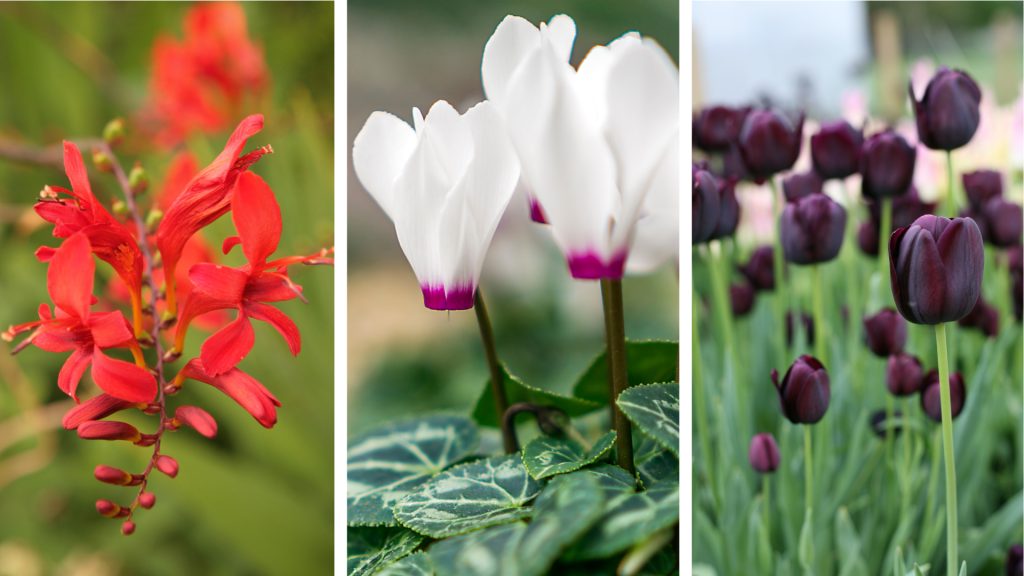

When it's a tuber… a rhizome… or a corm. We often refer to 'bulbs' in general to include plants such as crocus, cyclamen, crocosmia or ranunculi, which in fact all originate from corms. These, along with dahlias (from tubers), spring-flowering anemones (from tubers or rhizomes), and Iris germanica (from rhizomes), use underground starch storage organs as their method of sustained nutrition throughout winter.
So long as you plant them at the right time and in the right conditions, it doesn't matter too much what you call them. But if you're looking to propagate these plants and want an idea of how quickly and how far they're likely to spread of their own accord, it's useful to know which category they fall into.
Bulbs
A bulb is multi-layered in structure (think about an onion when you cut through it) and is in fact a modified shoot/leaf that has evolved to become a food storage organ for the plant. The leaf scales within a bulb help protect it from the extremes of winter, as well as giving some defence from pests such as mice or eelworms. If you dig up bulbs from a previous season you may see 'child bulbs' forming at the base of the main bulb. These will eventually break off to produce new plants, or you can carefully break them off yourself and plant them.
The best time to divide spring bulbs is 6–8 weeks after flowering has finished. Wait until the foliage has died back and become yellow and floppy as this gives the plant the opportunity to reabsorb nutrients from the leaves back into the bulb for next season's growing.
Popular flowering plants grown from bulbs: tulips, narcissus, hyacinths, alliums.
Corms
Corms look similar to bulbs but are usually smaller. They are underground adaptations of the plant stem. Although they have dry scaly outer leaves, they don't grow layers of scale leaves as bulbs do. Instead, they form new corms — 'cormlets' — each year, which grow on the side of the parent corm and can be broken off to propagate them. Corms also grow specialised roots which enable them to adjust their position in the soil to maximise their chance of blooming success. Clever, eh?
Popular flowering plants grown from corms: spring or autumn crocuses, Crocosmia, Gladiolus, and the alien-looking Ranunculus corms.
Rhizomes
Rhizomes are stems which grow horizontally just under the surface of the soil or sometimes on top of it. Adventitious roots allow the rhizome to take up nutrients from the soil, and its branching mechanism allows it to grow and spread quickly. Iris germanica (bearded iris), Bistorta (persicaria) and canna lilies all grow from rhizomes and can easily be divided as they spread to make new standalone plants. The rhizomes can be tough — you may need a small saw or bread knife to divide them — but they can survive this rough treatment if replanted promptly. Some plants take rhizomatous growth to extremes and should be contained or avoided altogether — bamboo, horsetail and Japanese knotweed.
Tubers
When we talk about growing flowers from tubers, dahlias are probably the first plant that springs to mind. Other flowering tubers include cyclamen, spring anemones and peonies. Tubers are root adaptations and are sometimes referred to as 'roots' by nurseries. Large tubers, such as dahlia plants, can be divided in spring with a sharp knife, making sure to include at least one 'eye' which will form the new shoots. If that's got you thinking about chitting potatoes, then you're on the right lines — potatoes also grow from tubers.
Peonies should only be divided once mature, and only every few years if the plant has become crowded, as this may delay flowering for a year or two.
Want to learn more about propagation — making new plants, for free? My Seed to Vase course and The Best Bunch Membership both cover it in detail.
