growing · July · 3 min read
Is It Worth the Wait to Plant a Biennial?
Ten biennials that fill the May–June hungry gap — foxglove, sweet william, wallflower, honesty, sweet rocket, and more.
Biennials have a two-year life cycle and won't flower until the second year. So — when should you sow biennials, and is it worth the wait?
As a flower farmer, growing biennials is a big win in my book. In mid-to-late summer, when your sowing of annuals is done, it's time to get the biennials out. Sow biennial seeds in July or August and they can be planted out in the autumn. They'll grow a bit, get established, and then hunker down over winter, before putting on a second burst of growth once the soil starts to warm the following spring. By late May you should have a wealth of beautiful blooms on plants that you'd half-forgotten about — it's a bit like winning on a forgotten lottery ticket!
If you're looking to add biennial plants to your cutting patch, here are 10 popular options, based on plants we grow here at Field Gate Flowers in the UK.
1. Foxglove (Digitalis purpurea)
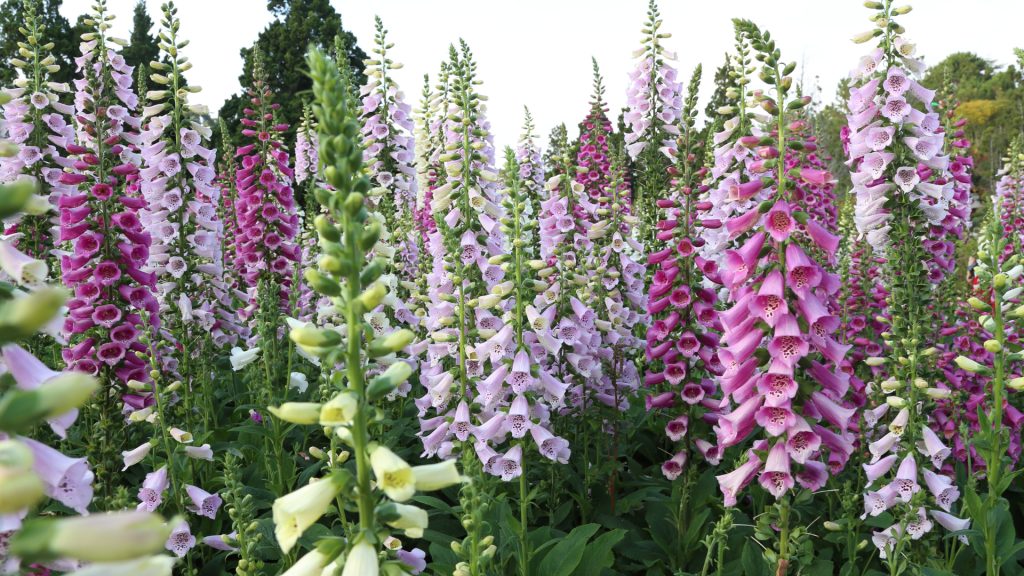
Foxgloves are tall, elegant plants with bell-shaped flowers in various shades of pink, purple, and white. They add height and drama to floral arrangements.
2. Canterbury Bells (Campanula medium)
Beautiful bell-shaped flowers in shades of blue, pink, and white. Perfect for adding a touch of elegance to your arrangements.
3. Sweet Rocket (Hesperis matronalis)
Sweet Rocket bears clusters of fragrant, four-petalled flowers in shades of pink, purple, and white. We paired them with tulips in bouquets this spring and they set each other off perfectly.
4. Honesty (Lunaria annua)
Also known as the money plant, honesty has attractive silver seed pods that are often used in dried flower arrangements. The plant also produces delicate flowers in shades of pink and purple.
5. Sweet William (Dianthus barbatus)
Sweet William produces clusters of fragrant flowers in a range of colours, including pink, red, and white. Excellent for cutting and adding to table decorations or bouquets.
6. Wallflower (Erysimum cheiri)
Wallflowers come in a variety of vibrant colours, including orange, yellow, and purple. They have a lovely fragrance and often flower in spring and then again in autumn.
7. Forget-Me-Not (Myosotis sylvatica)
You may not need to sow these as they find their way into most gardens without any help at all! The delicate clusters of blue flowers add a lovely touch to spring bouquets.
8. Evening Primrose (Oenothera biennis)
Evening primroses have large, showy flowers that open in the evening, so ideal for outdoor evening events. They are available in various colours, including yellow and pink.
9. Perennial poppies (Papaver nudicaule)
A short-lived perennial which performs best when grown as a biennial. Those in the 'Champagne Bubbles' Group produce fragrant, brightly coloured flowers with crinkled, slightly glossy petals, in shades of red, orange, yellow, pink and white. Delicate but hardy.
10. Love-in-a-Mist (Nigella damascena)
You say annual, we say not necessarily. I've slipped this onto the list as it's a hardy plant that can be sown in the autumn for flowering the following year. It also self-seeds very successfully, so although officially it's over in one season, it will keep itself going without too much input. Each single or double white, pink, blue or violet flower is surrounded by a misty ruff of finely dissected wispy leaves — giving the plant its common name.
If you take only three or four of these, you'll have a range of colours, fragrances, and heights in your cutting patch — ensuring a beautiful and varied selection for bouquets and other arrangements. For a structured guide through the whole growing year, join the Seed to Vase course.
Roz
