floristry · June · 2 min read
Cutting and Conditioning Your Blooms
The single skill that doubles your vase life. How and when to cut, condition and store British flowers.
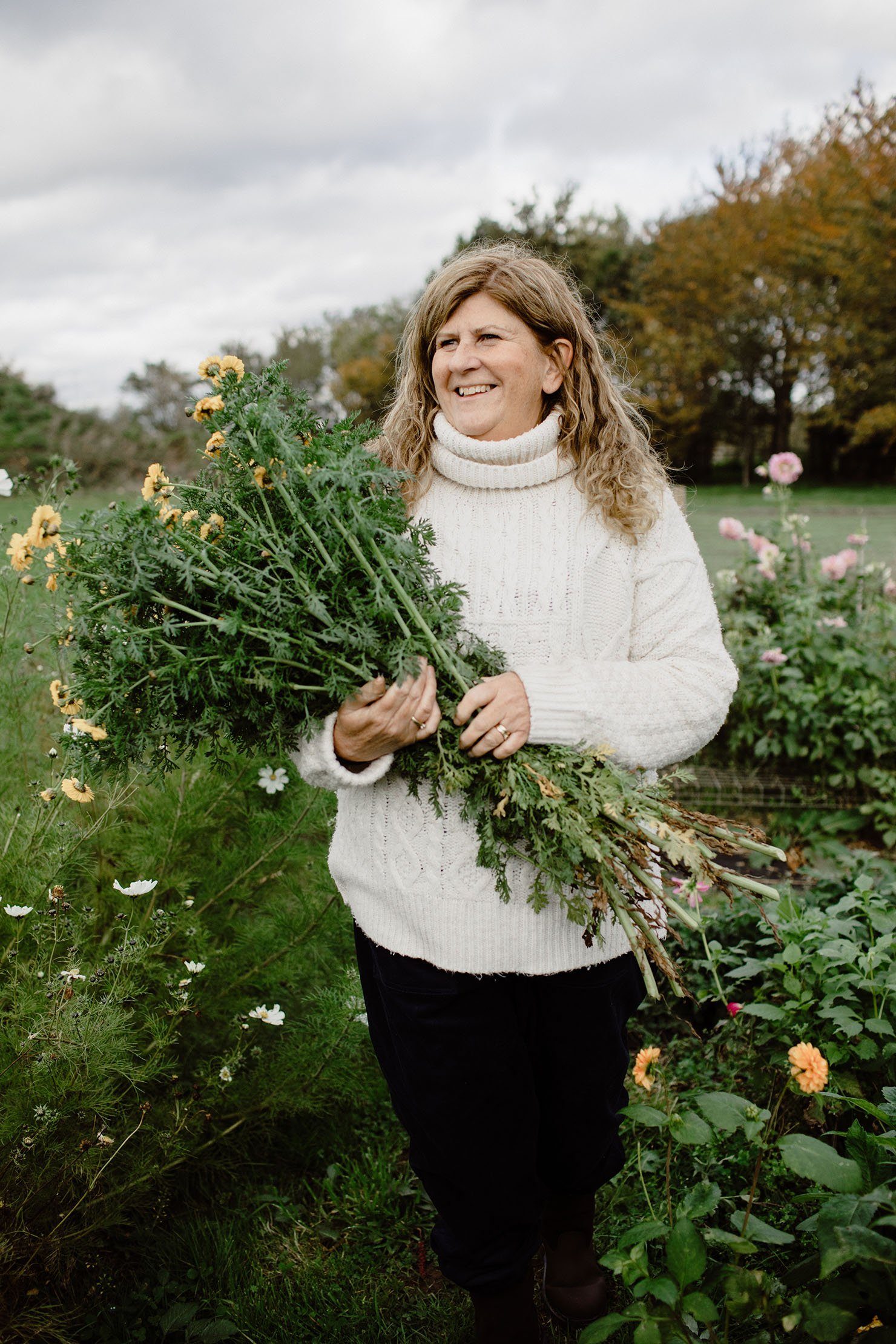

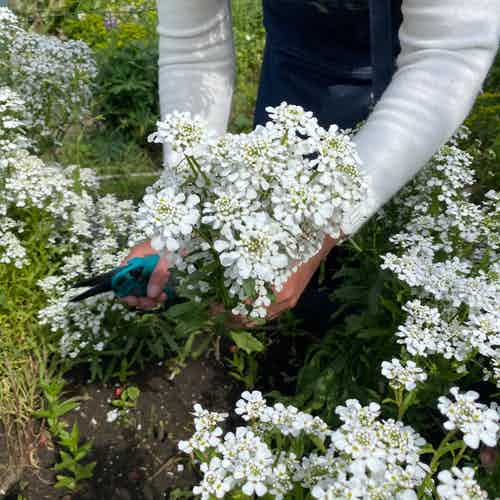
The single skill that doubles your vase life is cutting and conditioning properly. This is the quiet difference between a bunch that flops after three days and one that holds for ten.
When to cut
- Early morning, before 9am, when the stems are full of water.
- Or late evening, once the sun is off the patch. Never at midday in summer.
- Pick at the right stage: for most garden flowers that's when they're just opening — not in full blown bloom.
What you cut with
Sharp, clean secateurs. I clean mine with a quick wipe of alcohol between uses. Blunt cuts crush the vascular tissue and halve the vase life.
Straight into water
Have a clean bucket of cold water on the patch with you. Every stem goes straight in. No waving a bouquet around for Instagram and then walking back to the house — you'll lose hours of vase life.
Conditioning
- Strip every leaf below the waterline (leaves in water = bacteria = brown water = dead flowers).
- Leave the buckets somewhere cool and dark for at least two hours — overnight is better. Most growers call this a "deep drink".
- For soft-stemmed flowers (poppies, euphorbia) sear the cut end in boiling water for 10 seconds to seal the latex.
- For dahlias, strip hard, dip in boiling water briefly, then into a deep cold conditioning bucket.
Vase life tips for customers
- Re-cut stems 2cm off the bottom every 2–3 days.
- Change the water every 2 days (not just top up).
- Keep away from fruit bowls — the ethylene is a flower-killer.
- Keep out of direct sun and off heaters.
🎧 Listen to the podcast episode: The Cut Flower Podcast — Cutting and Conditioning
For a full practical walk-through of harvesting, conditioning and arranging, book a Best of the Bunch workshop or work through the Seed to Vase course.


