growing · March · 6 min read
Organic Flower Farming: The Principles I Will Not Compromise On
The non-negotiable standards that underpin everything I grow and sell: peat-free, foam-free, pesticide-free. Why these principles matter.
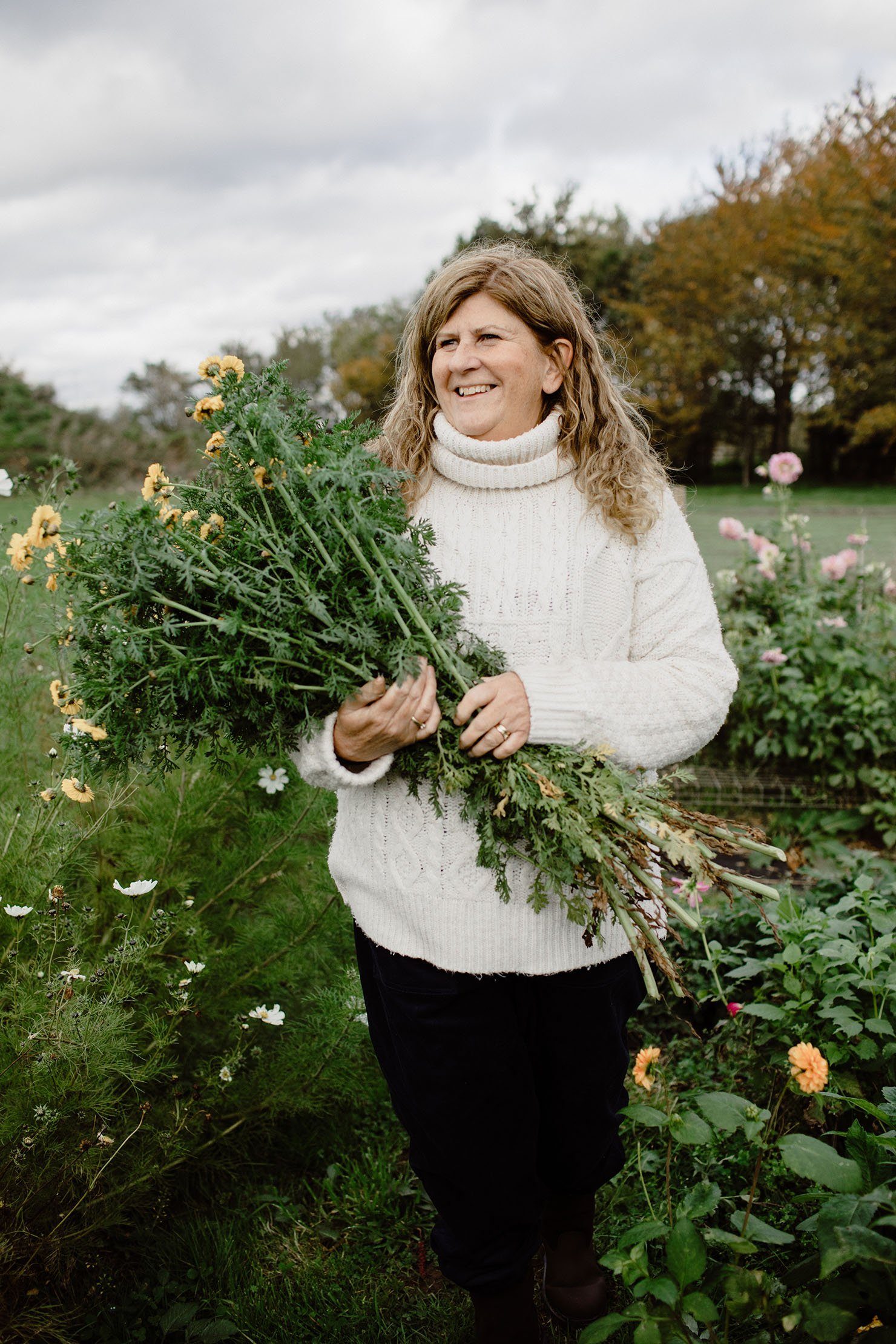

I will not grow flowers the way most of the world grows them. That decision was never up for debate. When I started Field Gate Flowers twenty years ago, I knew I would farm organically or I would not farm at all. This is not about labels or certification. It is about a set of principles I apply every single day, in every decision, from seed choice to stem harvest. Some of these principles are easy to maintain. Others require compromise, creativity, or a willingness to accept imperfection. But there are lines I will not cross, no matter how much easier it might make the work.
Why I chose organic flower farming
Imported flowers drove my decision. The industry standard is stems flown thousands of miles, grown in monocultures, drenched in chemicals I cannot pronounce, wrapped in plastic and shipped in refrigerated cargo holds. The environmental cost of conventional floristry is staggering: pesticide runoff, habitat destruction, carbon emissions, and flowers so devoid of scent they might as well be plastic themselves. What organic truly means in cut flower production is this: you grow in soil that is alive, you refuse chemicals that kill the life in that soil, and you accept that some seasons will be harder than others. You work with nature, not against it. You build fertility instead of mining it. You grow flowers that smell like flowers and you do not poison the ground to get them. That is the deal I made with myself and I have kept it.
Peat-free compost: the baseline
Peat extraction destroys habitats that have taken thousands of years to form. Peat bogs are carbon sinks, home to rare species, and irreplaceable once they are dug up and bagged. I stopped using peat-based compost in 2010 and I have never looked back. The homemade alternatives I use include leaf mould, garden compost, and a mix of coir, composted bark, and green waste compost for seed sowing. For potting on, I make my own blend: three parts peat-free multipurpose, one part garden compost, one part horticultural grit. It works beautifully for dahlias, cosmos, zinnias, and everything else I grow in pots. Where to source quality peat-free compost in the UK: look for certified organic brands like Melcourt or Dalefoot, or buy from local green waste schemes if you have access. The quality varies, so trial small batches first. If you want a full breakdown of how to start growing flowers without peat, that post covers soil prep, compost recipes, and what to avoid.
No pesticides, herbicides or chemical fertilisers
Building soil fertility without chemicals is slower but it lasts. I add compost every year, at least 5cm depth, plus homemade liquid feeds from comfrey and nettle. I rotate crops where I can, though on a small site that is limited. I grow green manures in winter: field beans, winter tares, crimson clover. They fix nitrogen, suppress weeds, and dig into the soil in spring. Natural pest control methods that work include encouraging predators (ladybirds, hoverflies, lacewings), hand-picking slugs at dawn, using copper tape around dahlia pots, and accepting a bit of damage. I have never sprayed a single pesticide at Field Gate Flowers and I never will. Why healthy soil creates strong plants: because roots grown in living, fungal-rich, well-structured soil can access nutrients and water efficiently. They resist disease better. They grow faster. Chemical fertilisers might give you a quick flush of growth, but they do nothing for soil structure, microbial life, or long-term resilience. I would rather wait an extra week for a stem than poison my ground.
Foam-free floristry, always
The problem with floral foam is simple: it is plastic. It crumbles into microplastics, it does not biodegrade, and it ends up in landfill or waterways. It is also entirely unnecessary. Chicken wire and biodegradable mechanics (moss, willow, compostable floral frogs) do the job just as well, often better, and they cost less over time. I have been arranging flowers without foam for two decades. Every wedding, every workshop, every design I teach is foam-free. Teaching brides and florists foam-free design is one of the most satisfying parts of my work. Once people see how easy it is to wire a hand-tied bouquet or build a chicken wire structure for an urn, they never go back. I talk about this regularly on The Cut Flower Podcast, because it matters. If you are a grower supplying florists, make it clear that you do not support foam and offer them alternatives. Most are grateful for the guidance.
No-dig soil management
How no-dig builds carbon and structure: by leaving the soil layers undisturbed, you preserve fungal networks, earthworm tunnels, and the natural tilth that takes years to develop. Digging disrupts all of that. It brings weed seeds to the surface, damages soil structure, and releases carbon. I switched to no-dig in 2015 and my soil has transformed. It is darker, spongier, easier to work. Mulching, composting and cover cropping are the three pillars of my system. I mulch with compost every spring, 5 to 8cm deep. I cover crop bare ground from October to March. I never leave soil naked. Why this method suits small-scale growers: because it saves time, reduces weeding, and improves yields without expensive machinery or inputs. If you want the full step-by-step process, my post on no-dig flower beds walks through bed prep, mulching schedules, and what to do in your first season. I also cover this in detail in my Seed to Vase course, where students build their own no-dig systems from scratch.
Where I bend and where I hold firm
Plastic tunnels and pragmatism: I use polytunnels. They are plastic. They will need replacing every ten to fifteen years. I accept that compromise because without them I could not grow flowers commercially in the UK. The season would be too short, the weather too unreliable. I offset that impact by refusing single-use plastics elsewhere, reusing every pot and module tray until they fall apart, and choosing the longest-lasting tunnel film I can afford. Imported seeds and the reality of UK supply: most of my seed comes from abroad. There are not enough UK-based organic flower seed suppliers to meet demand, especially for the varieties my customers want. I buy from Higgledy Garden, Chiltern Seeds, and a few European suppliers. I wish there were more British options, but I will not compromise on variety or quality while I wait for the industry to catch up. Where perfection is impossible and progress is enough: I cannot be zero-waste. I cannot eliminate all plastic. I cannot source every single input from within fifty miles. But I can make better choices every single day, and I can refuse to use the fact that perfection is impossible as an excuse to do nothing. That is where I hold firm.
If you want to build a flower-farming business rooted in these principles, but you are struggling with the practicalities, soil health, pest pressure, or how to communicate your values to customers, my 1:1 mentoring might help. We work together over three months on the specific challenges you face. I have mentored growers at every stage, from first beds to established farms. This is not generic advice. It is tailored, practical support from someone who has done it for two decades and will not compromise on the fundamentals.
Frequently asked
Can you grow flowers organically in the UK without huge losses to pests?+
Yes. I have grown organically for twenty years. Healthy soil grows strong plants. Companion planting, crop rotation, encouraging beneficial insects and hand-picking slugs all work. You will lose some stems, but not enough to sink your business. The key is accepting that perfection is not the goal.
What is the best peat-free compost for growing cut flowers?+
I make my own from homemade compost, leafmould and composted woodchip. If buying, look for products with good structure: coir-based or green waste composts work well for potting on. Avoid anything too fine or too woody. Test small batches first, because quality varies wildly between suppliers.
Is foam-free floristry harder or more time-consuming?+
No. Once you learn the techniques, chicken wire and pin frogs are faster than soaking foam. Stems last longer in clean water. Foam-free mechanics are reusable, cheaper over time, and far better for the environment. I teach this method in my courses and it is now my preferred way to design.